Don’t Look Back
- wwsmith6410
- Mar 11
- 3 min read
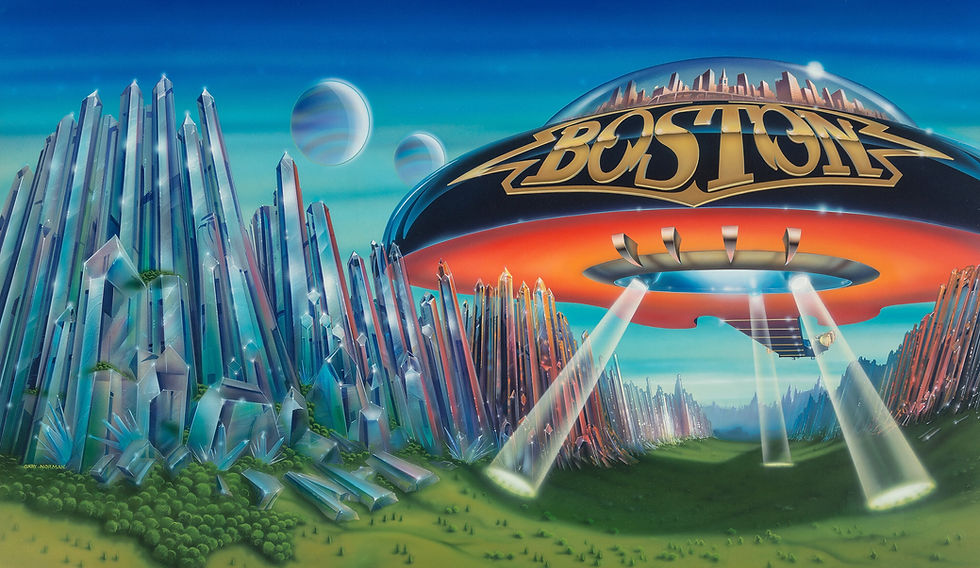
Sometimes a song doesn’t just take you back.
Sometimes it brings someone back with it.
That happened to me this week while driving, with SiriusXM playing through the speakers. A familiar guitar sound came on — that soaring, unmistakable sound of the band Boston.
The song was “Don’t Look Back.”
Boston’s music has been back in the news following the death this week of vocalist Tommy DeCarlo, who joined the band after the loss of original lead singer Brad Delp in 2007.
Hearing the song again sent me back to another time entirely.
I was in a basement many years ago with my friend Mackin.
Mackin was three years older than me, and like a lot of older friends when you’re a teenager, he served as a kind of musical guide. He was the one who first introduced me to Boston’s music. I remember sitting there while he dropped the needle on the record.
Then came that opening.
The synthesizers. Then the guitar. The way the song seemed to explode into Long Time.
I had never heard anything quite like it. It felt huge. Grand. Almost orchestral.
Looking back now, Boston’s debut album released in August of 1976 — Boston — may have been one of the greatest debut records in rock history. Song after song that people still recognize nearly fifty years later.
But the music itself is only part of why those songs matter to me.
They bring back Mackin.
He was my best friend for a long time, and I lost him in 2019 after a battle with cancer. Even now, when I hear certain songs, I still find myself thinking I ought to give him a call.
We would have talked about the Braves. Alabama football.
About music.
And of course, about Dorinda.
Music has a strange way of holding pieces of our lives like that. A song recorded decades ago can suddenly carry you back to a room, a moment, a friendship.
The sound that made Boston famous didn’t happen in a big studio at first. Guitarist and band founder Tom Scholz built much of it in a homemade basement studio while working as an engineer at Polaroid. Using equipment he designed himself, Scholz layered guitars and keyboards to create the massive, soaring sound that helped define arena rock in the late 1970s.

The band followed its debut with the album Don't Look Back, which included the song that caught my attention this week on the radio. The record sold more than a million copies in its first ten days — an astonishing number at the time.
DeCarlo’s own story was remarkable. A lifelong Boston fan, he posted tribute recordings online after Brad Delp’s death and eventually caught the attention of Scholz, who invited him to sing with the band.
DeCarlo died on March 9 — the same calendar date that Delp passed away nineteen years earlier.
The title of the song almost feels like advice.
Don’t look back.
But the truth is, sometimes looking back is exactly what we need to do.
Because every once in a while, when the right song comes on, you get a few minutes with someone you miss.
And that’s not a bad thing at all.
Music has a way of connecting people and places in ways we don’t always expect.
In the late 1970s, bands like Boston were experimenting with new ways to build a powerful rock sound in the studio. Around the same time, another kind of musical magic had been taking shape in small studios along the Tennessee River in northwest Alabama.
Places like FAME Studios and Muscle Shoals Sound Studio helped shape the sound of American music for decades.
That’s a story I’ll come back to soon after learning of the recent passing of guitarist Travis Wammack.
Like a lot of music stories, it begins with a conversation. This time with my cousin Jay Johnson.


Comments